





Serverless computing isn’t just a buzzword in cloud development anymore – it’s fast becoming the foundation of modern, scalable, and cost‑efficient applications. As organizations across industries accelerate their digital transformation journeys, serverless architectures are evolving to meet emerging demands around performance, real‑time processing, and intelligent automation.
In this article, we’ll explore the top serverless architecture trends for 2026 and beyond, and what they mean for developers and business leaders alike.
Why Serverless Matters in 2026
Serverless architecture allows developers to focus on writing business logic rather than managing infrastructure. With major cloud providers like AWS, Azure, and Google offering robust serverless platforms, adoption has grown rapidly – transforming the way applications are built, deployed, and scaled.
According to recent market analysis, the serverless architecture market is expected to grow significantly by 2026, with a projected value around $22.5 billion, expanding at a CAGR of over 24% through the next decade. This growth is fueled by cross‑industry adoption, demand for real‑time processing, and the ongoing shift toward cloud‑native and microservices architectures.
1. AI and Machine Learning Integration With Serverless
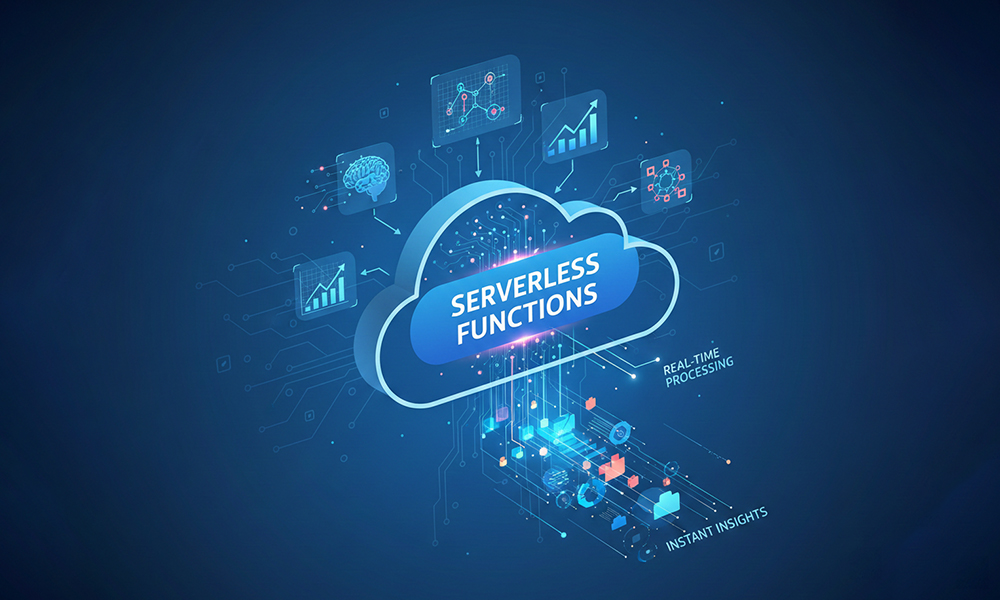
One of the biggest trends shaping serverless adoption in 2026 is the integration of artificial intelligence (AI) and machine learning (ML). Traditionally, AI workloads have required dedicated compute resources – often leading to costly infrastructure and complex provisioning. However, serverless platforms are now enabling organizations to run machine learning inference and even portions of model training as scalable, event‑driven functions.
This trend means smarter applications that can perform real‑time analysis, intelligent personalization, and automated decision‑making – all without managing servers.
Beyond immediate scalability, serverless AI integration also enhances operational efficiency. Cloud providers are increasingly offering services that simplify deployment of AI models as serverless endpoints, reducing developer overhead and accelerating innovation cycles.
2. Edge Computing: Bringing Serverless Closer to Users
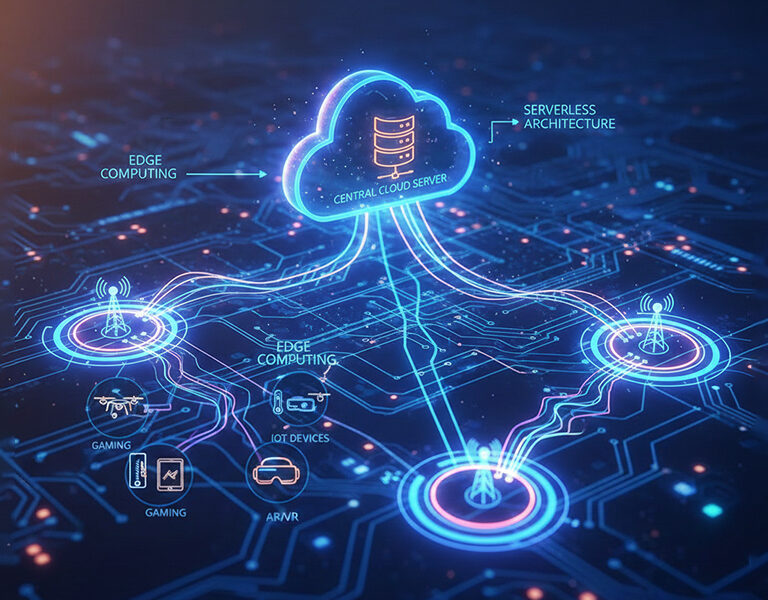
Latency has always been a critical consideration for real‑time applications – particularly those powering IoT devices, gaming, or interactive experiences. As we move into 2026, edge computing combined with serverless is becoming more mainstream.
Edge computing refers to processing data closer to where it’s generated rather than routing it back to centralized cloud servers. When serverless functions execute at the edge – through platforms like Cloudflare Workers, AWS Lambda@Edge, and Vercel Edge Functions – performance improves significantly by reducing round‑trip times.
For latency‑sensitive workloads such as autonomous vehicle telemetry, real‑time analytics, and live video processing, serverless at the edge is no longer “nice to have” – it’s becoming an industry standard. Cloud architectures that distribute processing closer to users also help in conserving bandwidth and improving reliability across geographies.
3. Hybrid & Multi-Cloud Serverless Strategies
Vendor lock-in has long been a challenge with traditional serverless deployments. Hybrid and multi-cloud serverless strategies are gaining traction in 2026.
Frameworks like Knative, OpenFaaS, and Red Hat OpenShift Serverless allow enterprises to deploy serverless workloads across multiple cloud providers. This brings benefits such as:
- Enhanced resilience and fault tolerance
- Avoidance of vendor dependency
- Compliance with data sovereignty requirements
Multi-cloud deployment allows organizations to choose the optimal environment for each workload, whether public cloud scalability or private cloud security.
4. Event-Driven Architectures Fueling Real-Time Applications
Serverless naturally aligns with event-driven application models, where code executes in response to triggers like API calls, database updates, or messages on a queue. This trend is increasingly important in real-time scenarios.
Examples include:
- E-commerce platforms updating inventory with every purchase
- IoT sensors pushing telemetry data for instant analysis
- Background tasks like notifications or video transcoding
Event-driven serverless models improve scalability and resource efficiency. This design is particularly effective in modern microservices architectures where loosely coupled components communicate through events rather than synchronous service calls.
5. Serverless Containers: Bridging Flexibility and Ease
The line between serverless and containerized applications is blurring. Platforms like AWS Fargate, Azure Container Apps, and Google Cloud Run now allow containers to run serverlessly.
Benefits include:
- Running custom runtimes or long processes
- Maintaining Dockerized workflows
- Combining flexibility with the auto-scaling benefits of serverless
This trend allows developers to leverage container ecosystems while enjoying the simplicity of serverless.
6. Improved Performance, Reduced Cold Starts, and Better Tooling
Cold start latency has traditionally been a challenge in serverless. By 2026, runtime improvements and provisioning strategies are reducing these delays, making serverless suitable even for performance-critical applications.
Enhanced tooling for observability, debugging, and monitoring provides developers with detailed insights into function execution, cost optimization, and latency patterns.
These advancements collectively boost developer productivity and reduce time‑to‑deploy, making serverless a compelling choice for teams looking to iterate rapidly.
7. Security Enhancements and Zero-Trust Models
Security remains a top concern for serverless adoption. The ephemeral nature of serverless introduces unique challenges, such as unauthorized function invocations and insecure APIs.
Cloud providers are embedding zero-trust principles in serverless architectures:
- Functions authenticate all requests
- Granular role-based access control
- Automated vulnerability scanning and compliance checks
These enhancements help organizations mitigate risks as they deploy serverless at scale, especially in regulated industries like finance and healthcare.

8. Sustainability and Cost-Efficiency Gains
Serverless architectures optimize resource usage by consuming compute only when needed, reducing energy waste compared to always-on servers. Enterprises are increasingly evaluating serverless for both technical efficiency and environmental sustainability.
More organizations are now evaluating serverless not just for technical benefits but also for green computing goals, aligning technology decisions with broader environmental sustainability objectives.
Conclusion
As we move into 2026, serverless architecture is transforming from an innovative option to a strategic cornerstone of cloud infrastructure. Whether it’s powering real‑time applications, integrating AI/ML workflows, enabling edge computing, or supporting hybrid cloud strategies, serverless is proving its value across every modern digital initiative.
For business and technology leaders, adopting these trends can mean:
- Faster time‑to‑market for new features and products
- More efficient operational costs with auto‑scaling and event‑driven execution
- Resilience through multi‑cloud and edge deployments
- Greater innovation potential powered by AI and real‑time insights
At Compilex Technologies, we help organizations navigate this evolving landscape – from building scalable serverless solutions to aligning cloud strategies with business goals. Embracing these trends today positions your enterprise for competitive advantage tomorrow.