








Software development is evolving faster than ever. Businesses are expected to release applications quickly while maintaining high standards of quality, security, and performance. This growing demand has made DevOps an essential part of modern software development.
In 2026, DevOps is no longer limited to Continuous Integration (CI) and Continuous Delivery (CD). It now includes AI-powered automation, Platform Engineering, DevSecOps, GitOps, Kubernetes, Infrastructure as Code (IaC), and cloud-native technologies. These innovations help businesses automate workflows, improve collaboration, strengthen security, and deliver software faster.
Whether you’re a startup building cloud-native applications or an enterprise modernizing existing systems, staying updated with the latest DevOps trends is essential. Let’s explore the biggest DevOps developments shaping the future of software delivery.
Why Keeping Up with DevOps Trends Matters
Technology changes rapidly, and businesses that rely on outdated development processes often face slow deployments, security risks, and higher operational costs.
Modern DevOps practices help organizations:
- Accelerate software delivery through automated CI/CD pipelines.
- Improve collaboration between development and operations teams.
- Strengthen application security with DevSecOps.
- Reduce downtime through proactive monitoring.
- Optimize cloud infrastructure for better scalability.
- Deliver reliable and high-performing applications.
Adopting the latest DevOps practices allows businesses to respond faster to market demands while maintaining a competitive advantage.
AI Is Transforming DevOps
Artificial Intelligence has become one of the biggest drivers of DevOps innovation. AI-powered tools automate repetitive tasks, analyze infrastructure data, and identify potential issues before they affect production systems.
Instead of manually reviewing logs or monitoring dashboards, AI detects unusual behavior in real time and provides actionable insights. It also improves CI/CD pipelines by automating code reviews, software testing, and deployment processes.
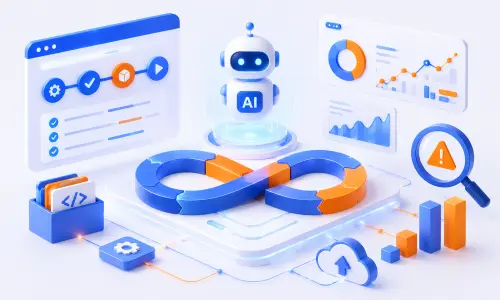
For businesses, AI-powered DevOps means faster releases, fewer manual errors, improved reliability, and lower operational costs.
Platform Engineering Is Improving Developer Productivity
Platform Engineering has become one of the fastest-growing DevOps trends in 2026.
Organizations are creating Internal Developer Platforms (IDPs) that provide developers with pre-configured environments, reusable templates, and self-service tools. This removes the need to manage complex cloud infrastructure manually.
Developers can focus more on building applications instead of configuring servers or deployment pipelines.
The result is faster development, fewer configuration errors, and more consistent software delivery across teams.
DevSecOps Makes Security a Priority

Security is no longer treated as the final step before deployment. Modern organizations now integrate security throughout the entire software development lifecycle using DevSecOps.
Security checks such as vulnerability scanning, dependency management, compliance validation, and secrets management are built directly into CI/CD pipelines. This helps teams identify and fix issues much earlier.
By adopting DevSecOps, businesses improve application security without slowing development. It also supports compliance with industry regulations while reducing the risk of costly security incidents.
GitOps Simplifies Cloud Deployments
GitOps has become a preferred deployment approach for cloud-native applications.
With GitOps, Git repositories act as the single source of truth for both application and infrastructure configurations. Every change is version-controlled, making deployments easier to track, review, and audit.
GitOps also enables automated deployments and faster rollbacks when issues occur. This improves collaboration between development and operations teams while increasing deployment reliability.
As Kubernetes adoption continues to grow, GitOps is becoming a standard practice for managing modern cloud environments.
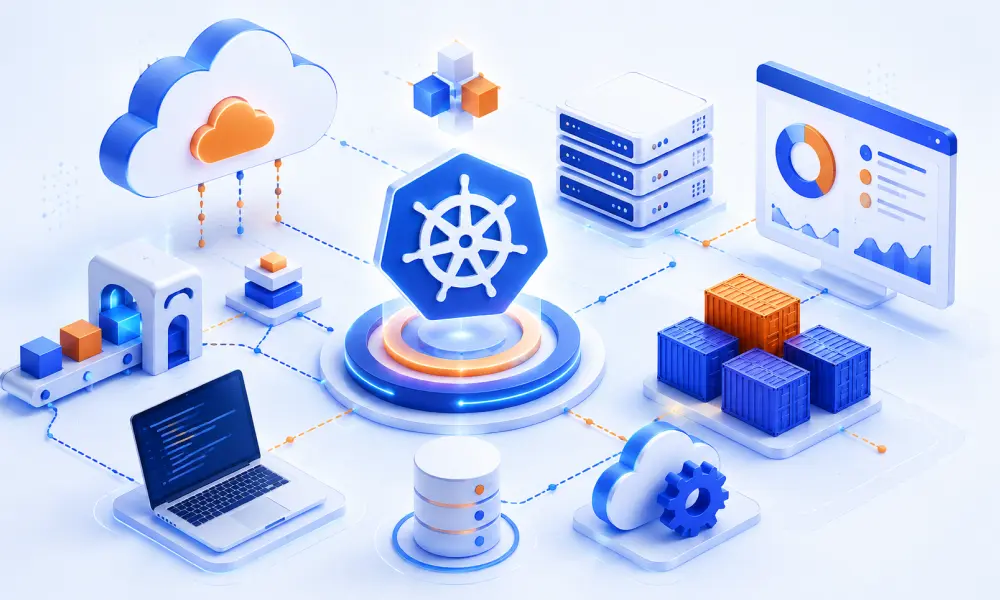
Kubernetes Continues to Lead Cloud-Native Development
Kubernetes remains the most popular platform for managing containerized applications.
It automates application deployment, scaling, and workload management while improving infrastructure reliability. Businesses use Kubernetes to build scalable microservices, support cloud-native applications, and simplify operations.
Managed Kubernetes services offered by leading cloud providers further reduce infrastructure complexity, allowing development teams to focus on innovation instead of maintenance.
For organizations moving to the cloud, Kubernetes remains a key technology for building resilient applications.
Infrastructure as Code (IaC) Drives Automation
Managing infrastructure manually is slow and increases the risk of configuration errors. Infrastructure as Code (IaC) solves this challenge by allowing teams to provision and manage cloud resources using code.
Popular tools such as Terraform, Ansible, AWS CloudFormation, and Pulumi automate infrastructure deployment while ensuring consistency across development, testing, and production environments.
Another growing trend is Policy as Code, which automatically enforces security and compliance rules before infrastructure changes are deployed.
IaC helps businesses improve scalability, reduce manual effort, and speed up cloud deployments.
Observability Is Replacing Traditional Monitoring
Modern applications are more complex than ever. Traditional monitoring only alerts teams when something goes wrong.
Observability provides deeper insights by combining metrics, logs, traces, and application performance monitoring into one platform. This allows DevOps teams to understand why problems occur and resolve them much faster.
AI-powered observability tools also detect anomalies automatically and prioritize alerts before users experience service disruptions.
Better visibility leads to faster incident resolution, improved application performance, and enhanced customer experiences.
Business Benefits of Modern DevOps
Organizations that embrace modern DevOps practices gain significant business advantages.
Some of the key benefits include:
- Faster software releases through automated CI/CD pipelines.
- Better collaboration between development, operations, and security teams.
- Improved application security with DevSecOps.
- Lower infrastructure costs through automation.
- Greater scalability for cloud-native applications.
- Reduced downtime and faster issue resolution.
- Higher operational efficiency.
- Better customer satisfaction through reliable digital services.
DevOps is no longer just about automation. It creates a culture of continuous improvement that helps businesses innovate faster and deliver better software.
How Compilex Technologies Can Help
Successfully adopting DevOps requires the right strategy, expertise, and tools. At Compilex Technologies, we help businesses modernize software development and accelerate cloud adoption with end-to-end DevOps solutions.
Our services include:
- CI/CD Pipeline Implementation
- Infrastructure as Code (IaC)
- Kubernetes Deployment and Management
- Docker Containerization
- AWS, Azure, and Google Cloud DevOps Solutions
- DevSecOps Integration
- Cloud Migration and Optimization
- Infrastructure Automation
- Monitoring and Observability
Whether you’re modernizing legacy applications or building cloud-native platforms, our experts help you improve efficiency, reduce deployment risks, and accelerate time-to-market.
Conclusion
DevOps continues to evolve with AI, automation, cloud-native technologies, and integrated security leading the way. In 2026, businesses that invest in Platform Engineering, DevSecOps, GitOps, Kubernetes, Infrastructure as Code, and observability will be better prepared to build secure, scalable, and high-performing applications.
Keeping up with these trends is no longer optional. It is essential for organizations that want to remain competitive in today’s digital landscape.
By adopting modern DevOps practices and partnering with experienced providers like Compilex Technologies, businesses can accelerate innovation, improve operational efficiency, and deliver exceptional customer experiences.