











In today’s fast-paced digital world, businesses must release software updates quickly while maintaining system stability. However, many development teams struggle with slow releases, frequent errors, and unexpected downtime. This is where DevOps becomes a game changer.
DevOps is a modern approach that combines software development (Dev) and IT operations (Ops) to improve collaboration, automate processes, and deliver applications faster and more reliably. Companies adopting DevOps for faster deployment can significantly reduce downtime while improving overall software quality.
In this article, we’ll explore how DevOps helps organizations streamline their development process, improve deployment speed, and ensure reliable system performance.
What is DevOps?
DevOps is a set of practices that integrates development and operations teams to automate and optimize the entire software delivery lifecycle. It focuses on collaboration, automation, and continuous improvement.
Instead of working in separate silos, DevOps enables teams to work together from development to deployment, ensuring faster releases and more stable applications.

Key elements of DevOps include:
- Continuous Integration (CI)
- Continuous Deployment (CD)
- Automation
- Monitoring and feedback
- Infrastructure as Code (IaC)
These practices help organizations deliver software updates more efficiently while maintaining high performance and reliability.
How DevOps Enables Faster Deployment
One of the biggest advantages of DevOps is its ability to accelerate the deployment process.
Traditional development workflows often involve manual processes and communication gaps between teams. DevOps eliminates these bottlenecks through automation and continuous integration pipelines.
Continuous Integration and Continuous Deployment (CI/CD)
CI/CD pipelines automatically build, test, and deploy code whenever developers make changes. This allows teams to release updates quickly and safely.
Benefits include:
- Faster release cycles
- Automated testing
- Reduced manual errors
- Faster feedback for developers
By implementing CI/CD and DevOps deployment, organizations can release new features and updates more frequently without disrupting users.
How DevOps Reduces Downtime
System downtime can lead to lost revenue, poor user experience, and damage to a company’s reputation. DevOps helps prevent these issues through proactive monitoring and automation.
- Automated Testing
DevOps pipelines automatically test code before deployment, identifying issues early in the development process. - Infrastructure Automation
With infrastructure as code, teams can automatically configure and manage servers, ensuring consistency across environments. - Continuous Monitoring
DevOps tools continuously monitor system performance, helping teams detect and resolve issues before they impact users.
By implementing these strategies, companies can significantly reduce downtime with DevOps and maintain stable digital services.

Key DevOps Best Practices
To fully benefit from DevOps, organizations should follow proven best practices.
- Automate Repetitive Tasks
Automation reduces human errors and speeds up development workflows. - Implement CI/CD Pipelines
CI/CD pipelines enable faster, more reliable deployments. - Encourage Collaboration
DevOps promotes strong communication between development, operations, and security teams. - Use Monitoring and Feedback
Real-time monitoring helps teams quickly detect performance issues. - Adopt DevOps Automation Tools
Tools such as Jenkins, Docker, Kubernetes, and GitHub Actions help automate and optimize development processes.
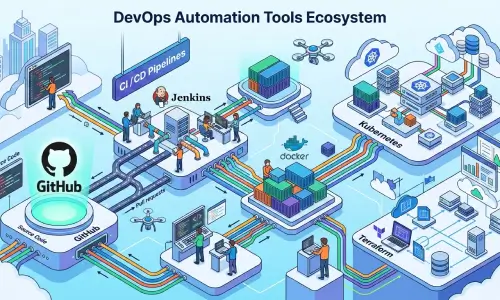
Following these DevOps best practices ensures smoother deployments and improved system reliability.
Benefits of DevOps for Businesses
Adopting DevOps offers several strategic advantages for modern organizations.
- Faster Time to Market
Businesses can launch features and updates quickly, staying ahead of competitors. - Improved Software Quality
Continuous testing and monitoring reduce bugs and performance issues. - Better Collaboration
DevOps breaks down barriers between development and operations teams. - Reduced Operational Costs
Automation minimizes manual work and increases efficiency.
Overall, the benefits of DevOps for businesses include faster development cycles, improved reliability, and better user experiences.
How Compilex Technologies Helps Businesses Implement DevOps
At Compilex Technologies, we help businesses transform their development processes through modern DevOps solutions.
Our DevOps services focus on:
- CI/CD pipeline implementation
- Cloud infrastructure automation
- DevOps automation tools integration
- Continuous monitoring and performance optimization
- Scalable deployment strategies
Our team works closely with organizations to streamline development workflows, accelerate deployment speed, and ensure stable system performance.
Conclusion
DevOps has become an essential strategy for organizations looking to deliver software faster while maintaining system reliability. By integrating development and operations, automating workflows, and implementing CI/CD pipelines, businesses can achieve faster deployment and reduced downtime.
Companies that embrace DevOps not only improve their development efficiency but also enhance customer experience and stay competitive in the digital landscape.
If your organization is looking to implement DevOps for faster deployment, Compilex Technologies can help you build a scalable, automated, and reliable software delivery process.